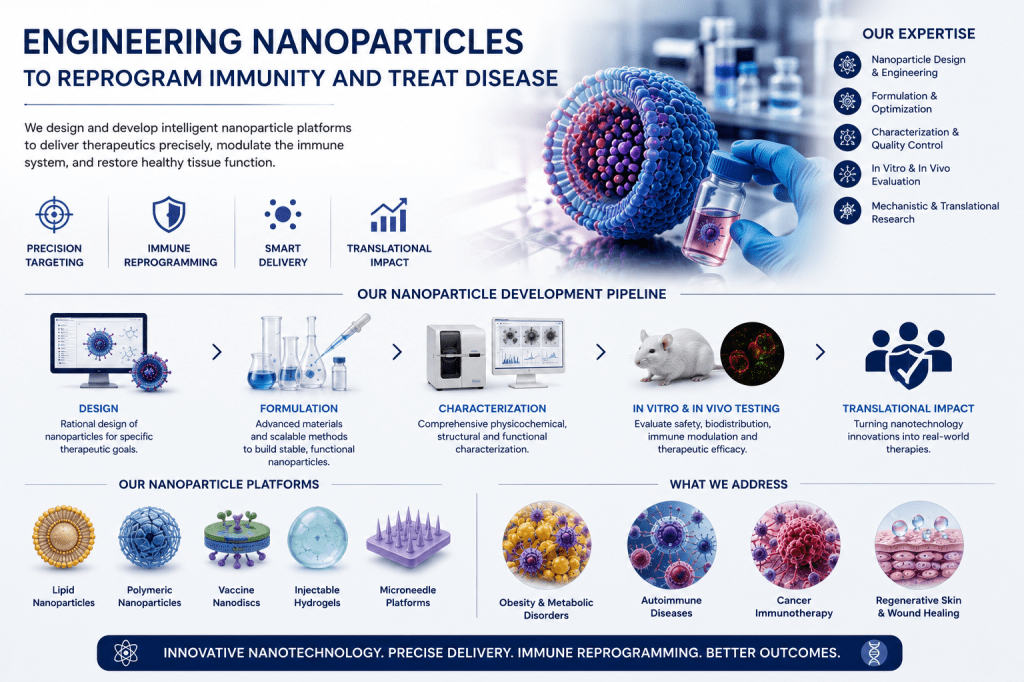
Our lab is dedicated to pioneering research on immunomodulatory biomaterials to develop next-generation therapies that modulate immune responses, enhance tissue repair, and improve treatment outcomes in obesity, wound healing, cancer, and inflammatory diseases.
Research Areas I: Nanotechnology for Obesity and Metabolic Inflammation
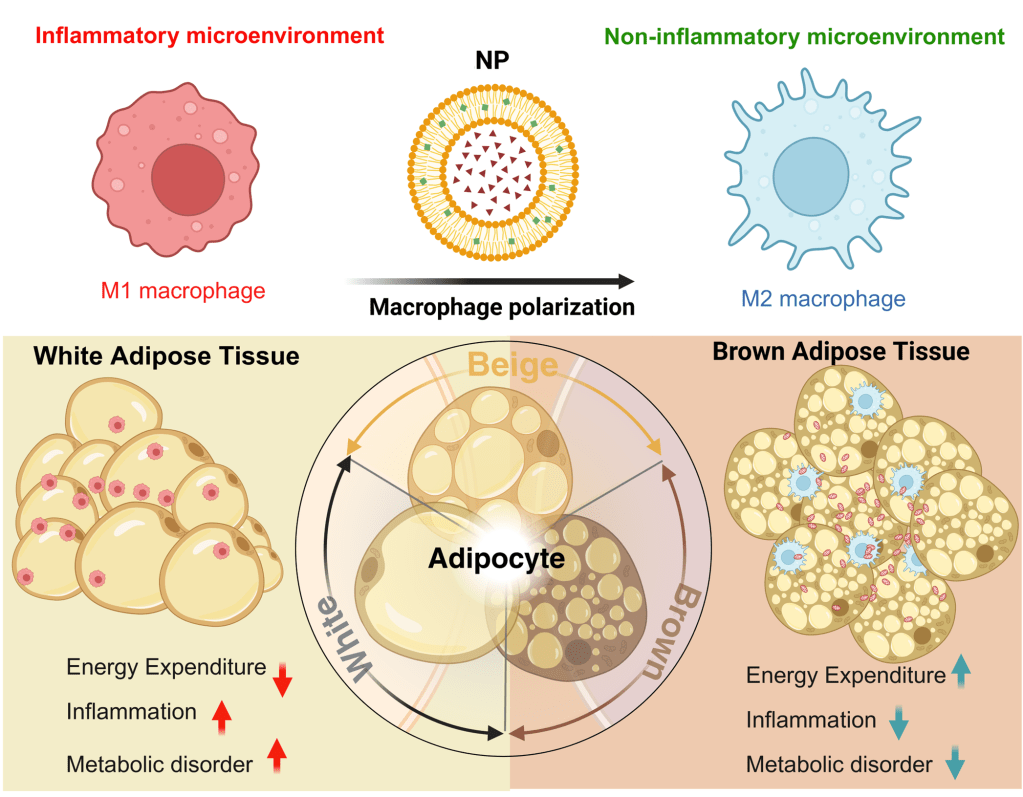
Hassani lab investigates the role of immunomodulatory biomaterials in obesity-related inflammation and metabolic dysfunction. We are particularly interested in developing targeted delivery systems to reprogram immune responses in adipose tissue, reduce chronic inflammation, and improve metabolic homeostasis. By combining biomaterial engineering with immunology and nanotechnology, our goal is to develop innovative therapeutic strategies that address the underlying inflammatory mechanisms contributing to obesity and its associated complications.
Research Areas II: Nanotechnology for Immune Activation in Cancer
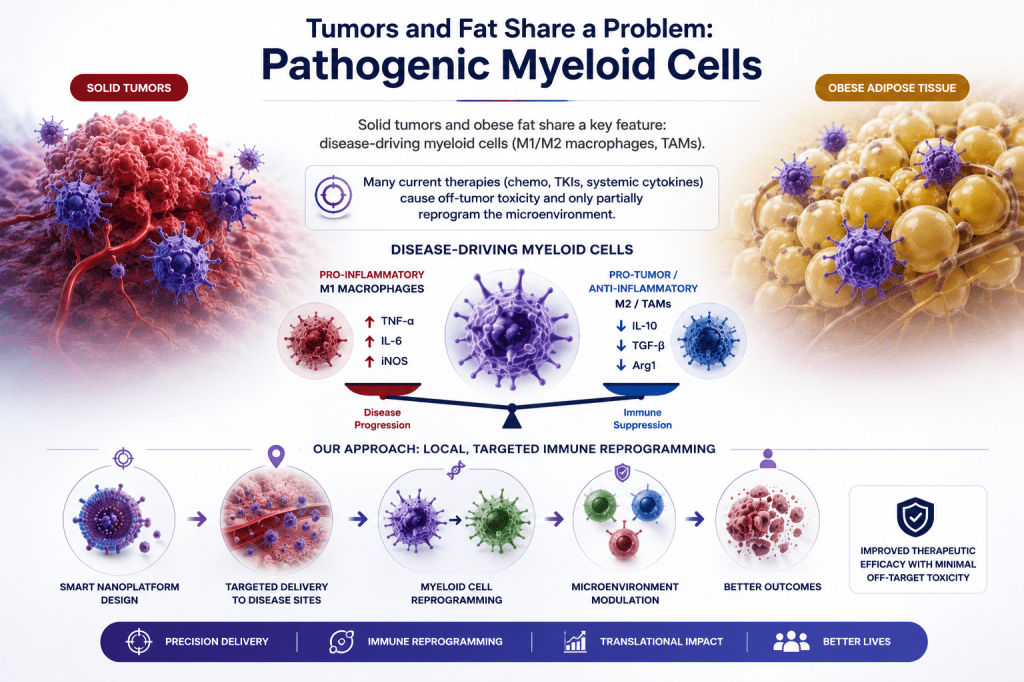
The Hassani Lab’s cancer research focuses on using nanoparticles and nanotechnology to activate the immune system and improve antitumor responses. We design immunomodulatory nanomaterials to deliver therapeutic cargo, reshape the tumor microenvironment, and enhance immune cell function against cancer. By integrating biomaterials, nanotechnology, and immunology, our goal is to develop innovative strategies that strengthen the body’s natural defenses and enable more effective cancer therapies.
Research Areas III: Nanotechnology for Immune Rebalancing in Autoimmune Disease
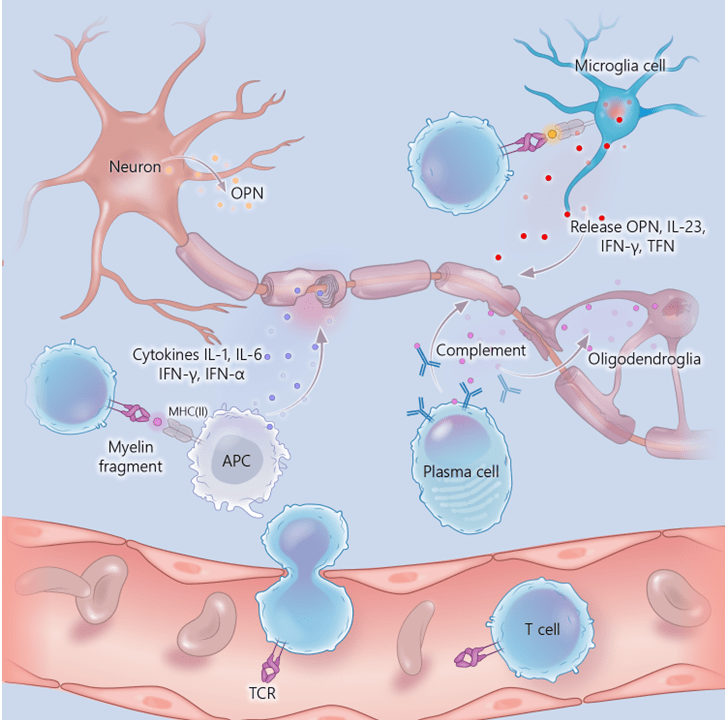
The Hassani Lab’s autoimmune disease research focuses on using nanoparticles and nanotechnology to modulate dysregulated immune responses and restore immune balance. We design immunomodulatory nanomaterials to deliver therapeutic agents, target key immune cells, and reduce pathological inflammation in autoimmune conditions. By integrating biomaterials, nanotechnology, and immunology, our goal is to develop innovative strategies that reprogram the immune system and create more precise therapies for autoimmune disease.
Research Areas IV: Immunomodulation for Wound Healing
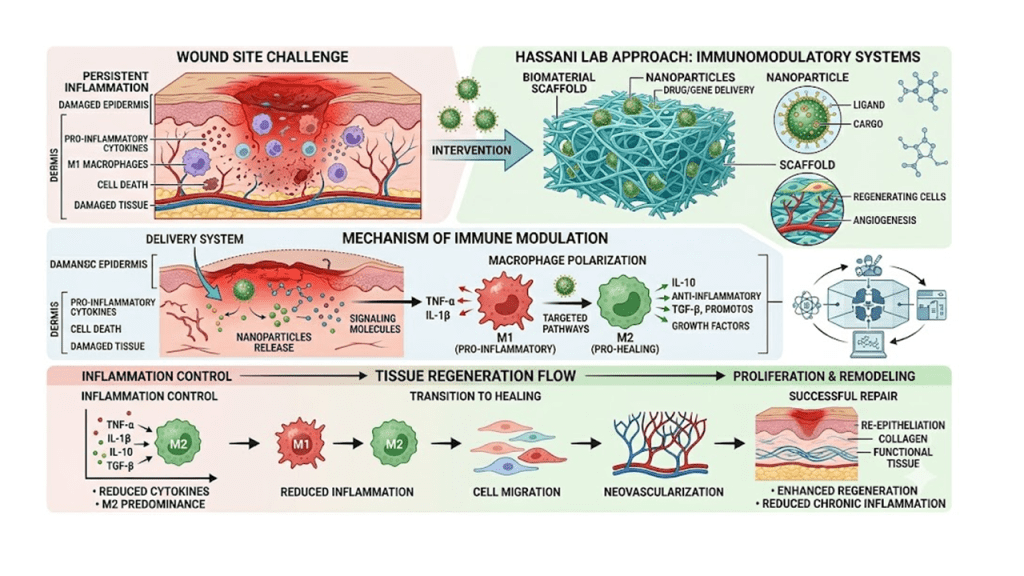
The Hassani Lab’s wound healing research focuses on using nanoparticles and biomaterials to modulate the immune system and promote tissue repair. We design immunomodulatory delivery systems that can regulate inflammation, support the transition to the healing phase, and enhance regeneration of damaged tissue. By integrating biomaterials, nanotechnology, and immunology, our goal is to develop innovative strategies to improve wound-healing outcomes and reduce chronic, non-healing inflammation.

